Fifth Sunday in Lent / Passion Sunday
- Jeremiah 31:31–34
- Psalm 51
- Hebrews 4:14–5:10
- John 12:20–36
In the beginning, God created. Why did God create? God wasn’t lonely. The Godhead has perfect community within itself, perfect love among Father, Son, and Holy Spirit. Why did God create? God desired to share this love, to expand the community. So God created humanity and invited humanity to know God.
The verb “know” has many nuances. To know is to experience, to understand, to perceive, to acknowledge. To know can also include emotional and physical intimacy. God wishes humanity to know him in most of these ways.
Adam and Eve knew God. They knew their Creator; they met with him in the cool of the day… until that fateful day when they disobeyed and ate the one thing they were instructed not to eat. They failed to obey.
Obedience has this heavy connotation for us. The idea of obedience brings images of the consequences of disobedience: the solitary confinement of a time-out in the corner, strict nuns with punishing rulers, scolding parents, detention, expulsion, prison, execution.
Let’s try to think of obedience in a different way.
In our epistle reading, the writer of Hebrews says Jesus, the Messiah, the Son of God, “learned obedience through what he suffered.” He didn’t suffer punishment because he disobeyed. He learned obedience through suffering. The word in that verse means what you expect, “to learn by experience, to come to understand.” That Jesus had to learn obedience is a mind-blowing concept we will not take time to explore today. I encourage you to sit in your prayer corner wrestling that one out with the LORD.
Obedience, ideally, is meant to be an expression of trust. Jesus tells us that if we love him, we will obey his commandments. Another way to say this is, “If you trust me, you will obey my commandments.” Jesus then sets the ultimate example, living out his trust in God the Father unto death, obediently trusting that the Father’s love would resurrect him.
Today is Passion Sunday and begins the two-week season of Passiontide, in which we consider Messiah’s suffering for us, culminating in Good Friday and his crucifixion.
Passion comes from the Latin pati, “to suffer,” or, said another way, “to experience and patiently endure pain.” Two summers ago, I hyperextended my knee while playing volleyball. The pain was – as we might say – excruciating (even if that is, perhaps, hyperbole). But as I experienced the pain, as my friends helped as they could, I also had a sense that the pain was temporary. The all-encompassing pain would pass. I just needed to wait it out. I needed to suffer it, to endure it, to pass through it. And I did. That is what we see Jesus do through Holy Week, especially from his arrest on Holy Thursday.
In today’s Gospel reading, Jesus says, “Now is my soul troubled. And what shall I say? ‘Father, save me from this hour’? But for this purpose I have come to this hour.” Already Jesus was suffering the thought of what was to come. When we have something unpleasant or painful to do – whether it’s a difficult conversation or the pain of a hard workout or the long recovery of surgery – we’re already mentally suffering before we physically suffer.
So, why does Jesus go through with it and endure? “For the joy that was set before him,” Hebrews says, Jesus endured the cross. The joy of what?
Today’s reading from the Prophets is a very dear passage to me. In Jeremiah 31:31, the LORD promises Israel a new covenant. The book of Jeremiah chronicles the warnings God gives the Kingdom of Judah before Jerusalem and the Temple are lost to the Babylonians and the Israelites are relocated to what is now Iraq. In the midst of the words of judgment, God also gives words of hope.
“Behold, the days are coming, declares the LORD, when I will make a new covenant with the house of Israel and the house of Judah, … I will put my law within them, and I will write it on their hearts. And I will be their God, and they shall be my people… for they shall all know me, from the least of them to the greatest, declares the LORD. For I will forgive their iniquity, and I will remember their sin no more.”
This is the new covenant that Jesus enacts at the Last Supper: “This cup which is poured out for you is the new covenant in my blood” (Luke 22:20). Jesus initiates this new covenant in which God’s instruction is no longer written on stone tablets or parchment scrolls but in our hearts and minds by the Holy Spirit. In this new covenant, God forgives the sins of Israel and of the nations. In this new covenant, we will all know God as intended, as Adam and Eve did before their disobedience.
If disobedience is an expression of a lack of trust, then obedience says, “I trust you.” Jesus lives out his trust even to death, even the death of the cross. That is where we get the word “excruciating” – as painful as crucifixion. That’s why I said that describing the pain of my knee injury as excruciating was an exaggeration. It was nowhere near the pain Jesus endured.
I hear a lot of people put down Mel Gibson’s The Passion of the Christ as too gory. Roman Catholics are much more comfortable with visual expressions of Jesus’ suffering than many of us here. Look at our little cross up there on the altar, brilliant, shining gold. We have no death-colored crucifix here.
I admit that the film The Passion of the Christ is overwhelming. I have not watched it again. But when I read that Jesus endured the cross for the joy set before him, I can vividly envision the horrors Jesus endured thanks to that film. He went through that for me. Why did he endure? Why did God in the flesh let his creation torture and kill him? For the joy set before him. What joy?
At the end of our Jeremiah passage, God says, “And no longer shall each one teach his neighbor and each his brother, saying, ‘Know the Lord,’ for they shall all know me, from the least of them to the greatest, declares the Lord.” The joy of the new covenant is that humanity will again know the LORD, as the Godhead intended at creation. The Lamb of God agreed to be sacrificed before the foundation of the world because God knew we would ruin our invitation into the community of Love. We sinners cannot enter into the community because God’s holiness would burn us up. Jesus endures suffering to make us holy, to wash us clean so that we can enter the community, so that we can know God. That is the joy Jesus endures for – the joy of you and me finally knowing God in all his fullness.
Jesus not only made the way for us to reenter the garden of fellowship that our ancestors Adam and Eve were forced to leave, but he also models for us obedience based on trust. The serpent questioned God’s integrity, sowing doubt in Eve’s mind that God could be trusted. Adam also ingested this doubt. Instead of asking God for clarification or for assurances, they acted on their doubt and disobeyed. Please hear me, questions and doubt are not the problems. We all have questions and even doubts. The problem is allowing those questions and doubts to erode relationship so that we can’t even trust enough to ask questions and, like Adam and Eve, instead make decisions and take sinful action from our doubt.
Today’s Hebrews passage tells us that Jesus was tempted in every way like us, but he did not sin; he kept trusting the Father. We often sin when we act out of distrust.
God, I know you said not to steal, but I’m hungry and you haven’t fed me. God, I know you said to keep a sabbath, but I can only pay my bills if I work seven days a week. God, I know you said not to commit adultery, but this person says they love me. In all these scenarios, the sinner is saying, God, I don’t trust your care for me, so I’m going to take care of myself.
Jesus, on the other hand, gives his back to his abusers. He’s punched in the face and gives them his other cheek. Rather than curse his executors, he intercedes for them, he asks God to forgive them. Jesus suffers all this and intercedes for us. Why? For the joy set before him, for the transformation of the sons and daughters of Adam and Eve into sons and daughters of God welcome at his community table forevermore.
This knowing God… this is not just a future thing. The Kingdom of God is now, even as we await the second coming. By the Holy Spirit, we can fellowship with God. One way is by partaking in the eternal Passover meal, which those of us here will do shortly.
But we can know God anywhere at any time. How? Some have called it practicing the presence of God. Not practice as in rehearse. When we say someone practices medicine or law, we mean “actively pursue or be engaged in” the art of medicine or law. So practicing the presence of God is actively pursuing and engaging God, thereby acknowledging that he is ever with us and ever desiring for us to engage with him.
Over Lent, I’ve been reading The Practice of the Presence of God and The Spiritual Maxims by Brother Lawrence. His is advice is very simple, yet most of us will struggle to do them day in and day out. Here are three tidbits on how to increase our awareness of the presence of God.
- We must strive to live holy lives, not to be saved, but to please God. Sin pushes away the presence of God. Since we are sinners, we will sin, so then we should quickly repent of that sin and ask for his forgiveness. As the psalmist reminded us today, “The sacrifice of God is a troubled spirit; a broken and contrite heart: he will not despise.”
- We have to be faithful to keep our “soul’s gaze fixed on God in faith, calmly, humbly, lovingly, without allowing an entrance to anxious cares and disquietude.” One way I might interpret this is, no matter what happens throughout our day, our response should be, “LORD, I trust you and know you have control. How should I deal with this situation?”
- “Make it your study, before taking up any task to look to God, be it only for a moment,” and while you are doing the task, and once you have finished the task. Brother Lawrence encourages us to not be disheartened by how we will fail in this simple practice. “Truly this habit can only be formed with difficulty, yet when it is so formed, how great will be your joy therein!”
Brother Lawrence continues: “This practice of the Presence of God is somewhat hard at the outset, yet pursued faithfully, it works imperceptibly within the soul most marvelous effects; it draws down God’s grace abundantly, and leads the soul insensibly to the ever-present vision of God, loving and beloved, which is the most spiritual and most real, the most free and most life-giving manner of prayer.”
This union of the human soul with God’s grace is the joy that sustained Jesus through his passion. His being lifted up on the cross is what draws all people to himself. Let us honor Jesus’ great sacrifice by seeking to know God day and night, “that, among the swift and varied changes of this world, our hearts may surely there be fixed where true joys are to be found.” Amen.
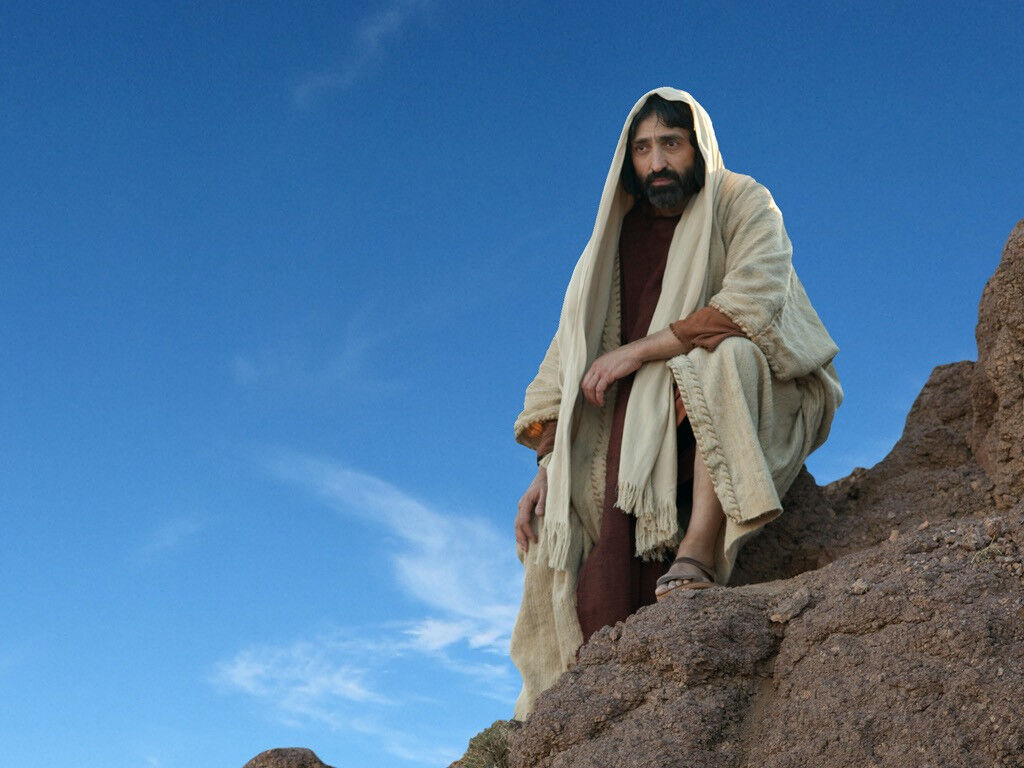
Image by The LUMO Project via FreeBibleImages.org