18th Sunday after Pentecost – Grace Anglican Church – Edgeworth, PA
Ezekiel 18:1-4, 25-32
Psalm 25
Philippians 2:1-13
Matthew 21:28-32
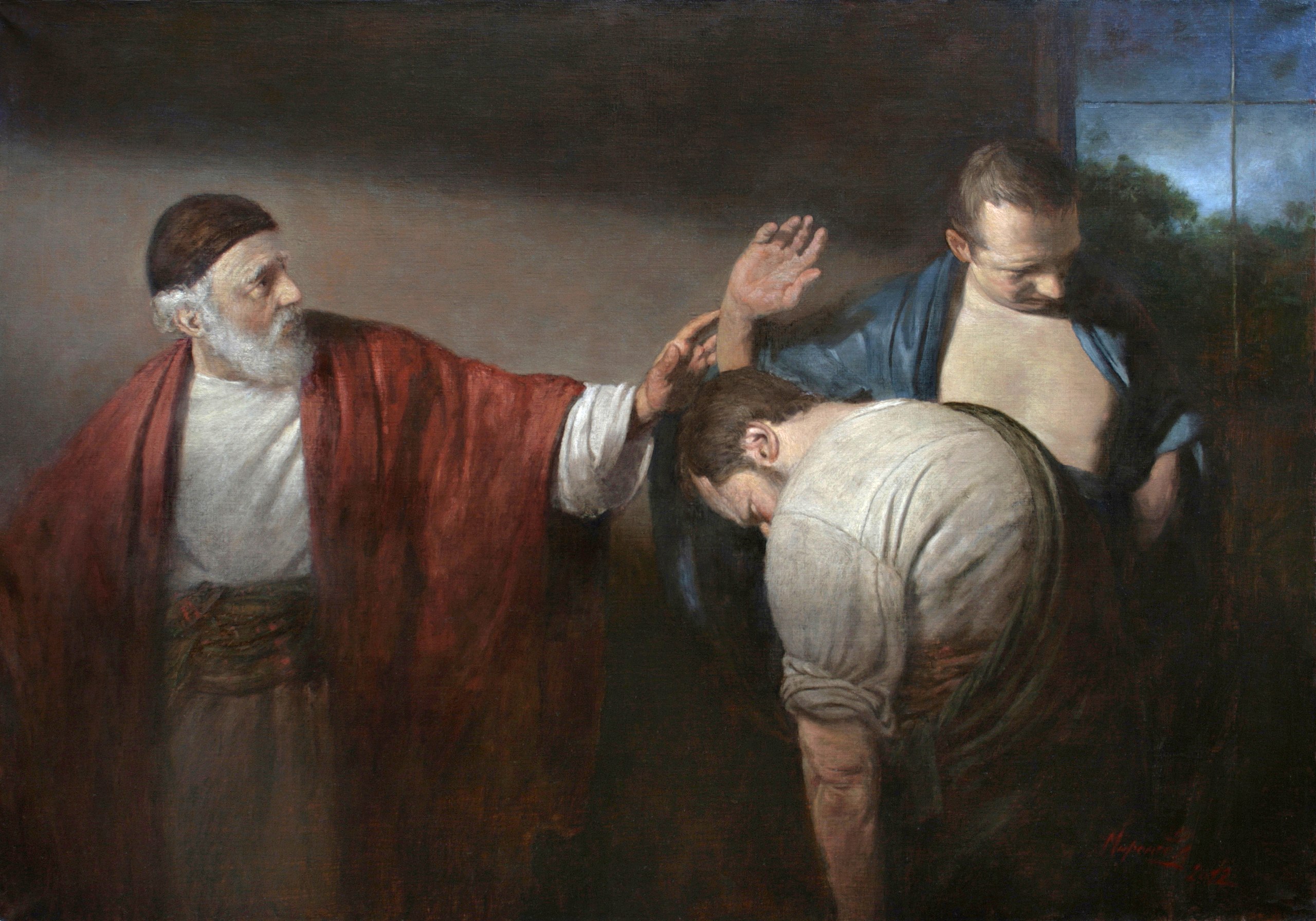
Parable of the Two Sons
- Context – when Jesus says things is as important as what he says.
- At the start of Matthew 21, Jesus publicly declares himself Messiah, King of Israel. How?
- Triumphal entry – parade without a permit
- Cleansing of the Temple – he’s looking out for the little guy, the women, the Gentiles, the poor who may be taken advantage and crowded by the merchants
- Healing blind and lame in Temple (Is 35)
- Jesus is generally causing a ruckus!
- vv 23-27 – priests and elders ask Jesus where his authority is from
- Jesus you just had a parade without a permit, you’ve disrupted our lucrative livestock and money-changing business, and all these people asking for healing are disrupting our prayers! Who said you could do this?!
- Why did they ask this question?
- Were they jealous of him?
- Were they feeling left out? [1]
- Were they genuinely worried Rome was going to retaliate that some guy had declared himself King with a parade?
- Their true motives are outside the scope of our time today, but what is clear is they did not trust Jesus
- A caution before we go on. The unbelief of these Jewish leaders wrongly has been applied to all Jews for all time by some Christians.
- As our Ezekiel reading says, God holds each person accountable for their own belief or unbelief, their own obedience or disobedience. Let us not hold the sins of these particular men against our Jewish neighbors, certainly not 2,000 years later.
- Jesus doesn’t answer the question directly
- but instead tells three parables meant to call out the leaders’ unbelief and warn them that they were in danger of missing the Kingdom of God.
- These parables (Two Sons, the Vineyard, the Wedding Feast) are very specifically for the religious leadership of the time. Today we look at the Parable of the Two Sons.
- At the start of Matthew 21, Jesus publicly declares himself Messiah, King of Israel. How?
- Parable of the Two Sons
- The story is straightforward.
- A father asks two sons to go work in the vineyard.
- One son says he’ll obey and doesn’t.
- The other son says he won’t go work, but then he does obey.
- Notice this is a family story.
- Fathers and sons. Parents and children.
- This illustration is internal to those already among the people of God.
- Jesus asks, Who is the obedient son?
- The religious leaders answer rightly.
- The one who obeyed even though he at first said no.
- Both sons have relationship with the father.
- But one has a broken relationship
- and one is seemingly in right relationship.
- The actions of the sons reveal the heart
- The son who said yes actually has a rebellious heart and doesn’t obey
- The son who said no has a repentant heart and changes his mind
- Jesus doesn’t leave interpretation open for his questioners.
- This story is comparing the worse sinners of Israelite society – prostitutes and traitorous tax collectors – with these resistant religious leaders
- The group of religious leaders who question Jesus are people who say yes to God with their mouths. But they do not recognize God’s ministry when they see John the Baptist and Jesus declaring God’s mercy.
- The prostitutes and tax collectors initially say ‘no’ to God but say ‘yes’ when they answered John the Baptist’s call to repentance.
- What did the religious leaders miss? They missed the signs of God’s coming kingdom, a kingdom of healing and mercy rather than of power and vengeance.
- Earlier in the chapter, after Jesus cleanses the temple of the merchants and money changers, the blind and lame come to Jesus and he heals them.
- Whenever you see Jesus healing the blind and lame, he is directly fulfilling a messianic promise (Isa 35)
- The religious leaders should have recognized this sign.
- Here in our reading, Jesus says the religious leaders ignore the repentance of the sinners who went out to be baptized by John.
- v.32 For John came to you in the way of righteousness, and you did not believe him, but the tax collectors and the prostitutes believed him. And even when you saw it, you did not afterward change your minds and believe him.
- These leaders were so blind with hate or jealousy or love of power – whatever their deal is – that they cannot rejoice in and recognize the coming of God in sinners turning from their sin.
- Earlier in the chapter, after Jesus cleanses the temple of the merchants and money changers, the blind and lame come to Jesus and he heals them.
- This story is comparing the worse sinners of Israelite society – prostitutes and traitorous tax collectors – with these resistant religious leaders
- The story is straightforward.
- Recap
- Jesus has publicly declared himself king in Jerusalem by
- Riding into town on a donkey, fulfilling Zechariah 9:9
- Cleansing the temple of those who take advantage of the poor in spirit
- Healing the lame and blind, fulfilling Isaiah 35
- The religious leadership – priests and teachers – skeptically ask Jesus who gave him authority to do these things.
- Jesus answers with the Parable of the Two Sons
- Jesus indicts the religious leaders for not recognizing God moving in the hearts and minds of those heeding John the Baptist’s call of repentance nor recognizing the signs of his messiahship
- Jesus has publicly declared himself king in Jerusalem by
- What does this have to do with us? What does this text say to us?
- On the Pharisees and priests
- There is a tendency to read the Pharisees and temple leadership as the bad guys of the New Testament. They can’t see who Jesus us but we do. Don’t be like them.
- When we think we are better than them because we see Jesus, we have become them.
- The Pharisees and temple leadership were the religious faithful of their time and place. They knew the Bible. They knew their history. They wanted to see God’s Kingdom come on earth as it is in heaven.
- But they got stuck on what they imagined the coming of the Kingdom of God would look like. When Jesus didn’t look like what they imagined Messiah may look like, perhaps being blinded by the cares of this world and the trappings of power, they missed the dawn of the Kingdom. They even tried to stop its coming by trying to put an end to Jesus
- Here we are in church. I’m sure I know about all of you in here. We’re here every Sunday. We know our Bible. We know our history. We want to see God’s Kingdom come on earth as it is in heaven.
- Are we attuned to see God’s Kingdom already among us and calling us to continue in a lifestyle of repentance?
- On the Pharisees and priests
- Seeing God’s Kingdom already among us
- This is also called practicing the presence of God
- Noticing the small and big graces in our life and acknowledging that all good things come from God
- From the mundane blessing of a hot shower every morning to everybody’s car brakes working when that deer or worse, a child, darted out into the road. You’re shaken up but no body was hurt.
- Jesus is calling us to practice the presence of God when we see redemption in people’s lives
- What do you think and feel when I say
- Hookers for Jesus
- Machine Gun Preacher
- [pause]
- Do you recoil? Or do you want to know more?
- Hookers for Jesus is a survivor-led faith-based organization addressing the harmful effects of prostitution, sex trafficking and sexual exploitation linked to pornography and the sex industry by preaching the hope of Jesus Christ. They help women get out and restart their lives outside of the sex industry.
- Are we put off by the name. Don’t say Hookers for Jesus. Say Former Hookers. Do we get stuck on semantics?
- Or can we see that Hookers for Jesus are continuing Jesus’ Isaiah 61 mission to free the captives and the oppressed?
- Machine Gun Preacher is a movie that tells the story of Sam Childers. Sam was a biker gang member who struggled with drug addiction before he came to know Jesus Christ. Restless with quiet American Christianity, Sam went to Uganda on a short-term mission trip. There he learned about the atrocities many were suffering in Sudan. He began building orphanages and clinics in Sudan, but they were being raided by rebels. After losing buildings and children, he realizes he must defend these children. He arms himself and his staff. This is why he becomes known as the Machine Gun Preacher.
- Are we put off by the name? Machine Gun Preacher is so unchristian. Maybe we disagree with his taking up a gun to defend the refugees and orphans under his care. Sure, he’s saving children. But you live by the sword, you die by the sword.
- But he’s proclaiming the Gospel of Christ to the widow and the orphan. James says that this is true religion, to care for widows and orphans. Can we see that God is in the midst of Sam Childers’ ministry or can we only judge his controversial methods?
- What do you think and feel when I say
- This is also called practicing the presence of God
- Be humbly attentive to God in our midst
- The priests and Pharisees in Jesus’ day were so busy being holy and pointing out how others were not holy enough that they missed God walking into the temple where they worshipped him.
- Morning prayer is good. Coming to Eucharist is good. Volunteering is good. Bible study is good. Let’s us do these things – not to check off a to-do list – but to worship God, to get to know what his presence looks and feels like.
- Allow these spiritual disciplines to make you sensitive to God’s presence in the wider world.
- When we pray the Lord’s Prayer, particularly “your Kingdom come, your will be done on earth as it is in heaven”, think where you already see this happening at home, in your neighborhood, at work, in your town, in your extended family. God is here. The Kingdom of God is already breaking in even as we await Jesus’ return.
- Don’t be afraid when they make you more sensitive to your sinfulness. This is God’s call to a lifestyle of repentance. That’s also built into the Lord’s prayer:
- “Forgive us our trespasses as we forgive those who trespass against us.”
- “Lead us not into temptation but deliver us from evil”… Not just evil in the wider world but the evil that the Holy Spirit is sanctifying out of us.
- Allow these spiritual disciplines to make you sensitive to God’s presence in the wider world.
- Conclusion – What does this parable tell us?
- God values repentance over lip-service.
- God rather we say no to him and change our minds than say yes and ignore or miss his offer of mercy to all.
- Your no to God can always become yes. Don’t ignore but value when you see healing, forgiveness, repentance in those around us. They are signs of God being in our midst.
- We can always answer his call even if we’ve said no in the past. God is always ready for us to come to him.
- Let us be sensitive to God’s presence in the mundane and in the lives of those around us.
- I can’t help of think of the opening of Kenyan Eucharistic rite:
Is the Father with us?
He is
Is Christ among us?
He is.
Is the Spirit here?
He is.
This is our God.
Father, Son, and Holy Spirit.
We are his people.
We are redeemed.
Lift up your hearts.
We lift them to the Lord. - Let us pray: O God our King, by the resurrection of your Son Jesus Christ on the first day of the week, you conquered sin, put death to flight, and gave us the hope of everlasting life: Redeem all our days by this victory; forgive our sins, banish our fears, make us bold to praise you and to do your will; and steel us to wait for the consummation of your kingdom on the last great Day; through Jesus Christ our Lord. Amen.
Footnote
[1] The Jewish Gospel of John by Eli Lizorkin-Eyzenberg posits that the leadership wanted to be the gatekeepers, the ones who validated Jesus’ Messiahship, but he did not desire their approval.
[2] Banner image: Parable of the Two Sons by Andrei Mironov via Wikimedia Commons