Sixth Sunday After Pentecost – Year C
Genesis 18:1-14
Psalm 15
Colossians 1:21-29
Luke 10:38-42
May the words of my mouth and the meditations of all our hearts be acceptable in your sight, our Lord, our Rock, and our Redeemer. Amen.
Good morning, friends. Today, let us look at Rabbi Sha’ul’s letter to the church at Colossae. That’s the Apostle Paul to us Gentiles. I call him Rabbi Sha’ul (or Saul) to remind us that Paul must be read not only in his Greco-Roman context but also in his Second Temple Jewish context.
For example, I’m from Texas. I’ve lived in many places in the US and abroad. However, I was raised in a place where the Texas myth collides with the Mexican experience. I am, for all my life, a mixture of those two worlds, plus a good dose of Israel and now a dash of Pittsburgh. If you know this, you know why I say y’all and not yinz, why I’ll greet you with a Howdy or Shalom, why there is always a story about Texas A&M University lurking, ready to leap out and glory in the weird of Aggieland. Similarly, we must remember where Paul comes from.
Sha’ul was born a Roman citizen in Asia Minor but was educated in Jerusalem, having studied at the feet of one of the great rabbis of the late Second Temple Period. He persecuted the early church out of a zeal nurtured during his rabbinical education. And when he encountered Jesus, the risen Messiah, on the road to Damascus, all that is Sha’ul was realigned – not erased – in service of the LORD. When Paul understood that the Age To Come is invading the present age now, already, he knew that the ingathering of Israel and the Nations foretold in the Prophets had begun. This paradigm is important to understanding his epistles.
Paul’s not always a favorite among the New Testament writers. He says things that rub us the wrong way, but sometimes we have flat-out misread Paul. When we think Paul has said something ridiculous, we need to look again and interpret him not only within the whole counsel of the scriptures but through Paul’s cultural and religious context. With that in mind, let’s look at Colossians 1.
Last week, Cody touched on this chapter, but let’s recap what Paul has been saying thus far. Paul is writing a church he’s never been to. For this reason, I find it easier to put myself in the shoes of the Colossians. I’m a Gentile follower of Jesus. I’m trying to be faithful to the Gospel of Jesus, the Messiah of Israel. And this Jewish rabbi has some things to say to me.
Paul starts with some pretty heady stuff. He reminds us that, through Jesus, God the Father has qualified us to share in the inheritance of the saints, or the Holy Ones. For the Colossians, who at this point only have the Hebrew scriptures, they’re thinking: Noah, Abraham, Isaac, Jacob, David, the Maccabean martyrs. Wow! We Gentiles – who were estranged and hostile – share an inheritance with the heroes of the Bible! That’s a pretty big WOW for our Colossian brothers and sisters.
It should be a big wow for us too, but because we here all grew up in a Western culture that still has vestiges of Christianization, we don’t think of ourselves as former pagans. I have a colleague who has that pagan past at the forefront of his mind, especially when he’s conversing with Jewish people. When they ask him why he cares about Jews, he says, “I’m of Scottish descent. By all rights, I should be a pagan worshipping the Celtic gods, but because of Jesus I worship the God of Israel.” Same with me. I’m of Mexican descent and should perhaps be worshiping the gods of the Aztecs. Yet, I worship the God of Israel.
Think of your ancestral history. If you or some ancestor hadn’t turned to Jesus, what or who would you be worshipping?
Instead, God has transferred us from Satan’s domain of darkness into the Kingdom of Light of Jesus, the Son of God. How? Jesus, the image of the invisible God, has repaired the broken relationship between the creation and the Creator by the blood of the cross. In his death, Jesus in his physical body made peace between God and his sin-infested creation. This is Yom Kippur language. Jesus’s atoning death is cleansing heaven and earth, is cleansing us, is making us holy and blameless so that he can present us before God.
Paul, in verse 22, says Jesus has done this reconciliation “in his body of flesh by his death.” Some will note that this sounds redundant, but Paul is being explicit for two reasons: he wants to make clear that Jesus – who he said earlier is the image of the invisible God – has a real, living, breathing, flesh-and-blood body; secondly, Paul will refer to Jesus’ metaphorical or mystical body, the community of believers, the Church, a bit further down.
Up to now, Paul has been speaking broadly of Jesus’ exalted place and redemptive work within all creation. In verse 23, he speaks specifically to the believers. He says Jesus has reconciled us, made us blameless and holy, “provided that you continue in the faith, stable and steadfast, not shifting from the hope of the good news which you heard.”
“Provided…” Something we must do? Something we must keep doing? Isn’t that works righteousness? Aren’t we saved by free grace?
I said earlier that Paul is using Yom Kippur language. It’s even broader than that. Paul certainly has the Levitical sacrificial system in mind as he talks about Jesus’ reconciling sacrifice.
In Leviticus, God drew us a picture of how sin sullies creation and how sin repels the presence of God, but God also showed us how to participate in his cleansing of us and creation so he can dwell among us. When an Israelite sinned against God and his neighbor, he could offer a sacrifice to cleanse the stain of sin from the camp and himself. However, for the sin offering to be effective, the sinner had to put his hand on the animal being offered. Without that action of placing his or her hand on the lamb, the sacrifice was not valid.
That simple action of placing one’s hand on the sacrifice communicated two things:
- I confess my sin before God and
- I trust that he will respond to my repentant heart with his mercy.
This act of confession and repentance would happen over and over again as Israelites – being ordinary humans like us – sinned all the time.
Let’s put Paul’s words into this Levitical context: Jesus reconciles us and makes us holy “provided that you continue in the faith, stable and steadfast, not shifting from the hope of the gospel which you heard.”
The hope of the gospel is that God loves us, wants to have relationship with us and so forgives us our sin. But, gosh, do we sin… and sin… and sin… and sin. Even Paul says elsewhere, I do what I don’t want to do and I don’t do what I want to do. “Wretched man that I am! Who will deliver me from this body of death?” (Rom 7). Spoiler alert: It’s Jesus.
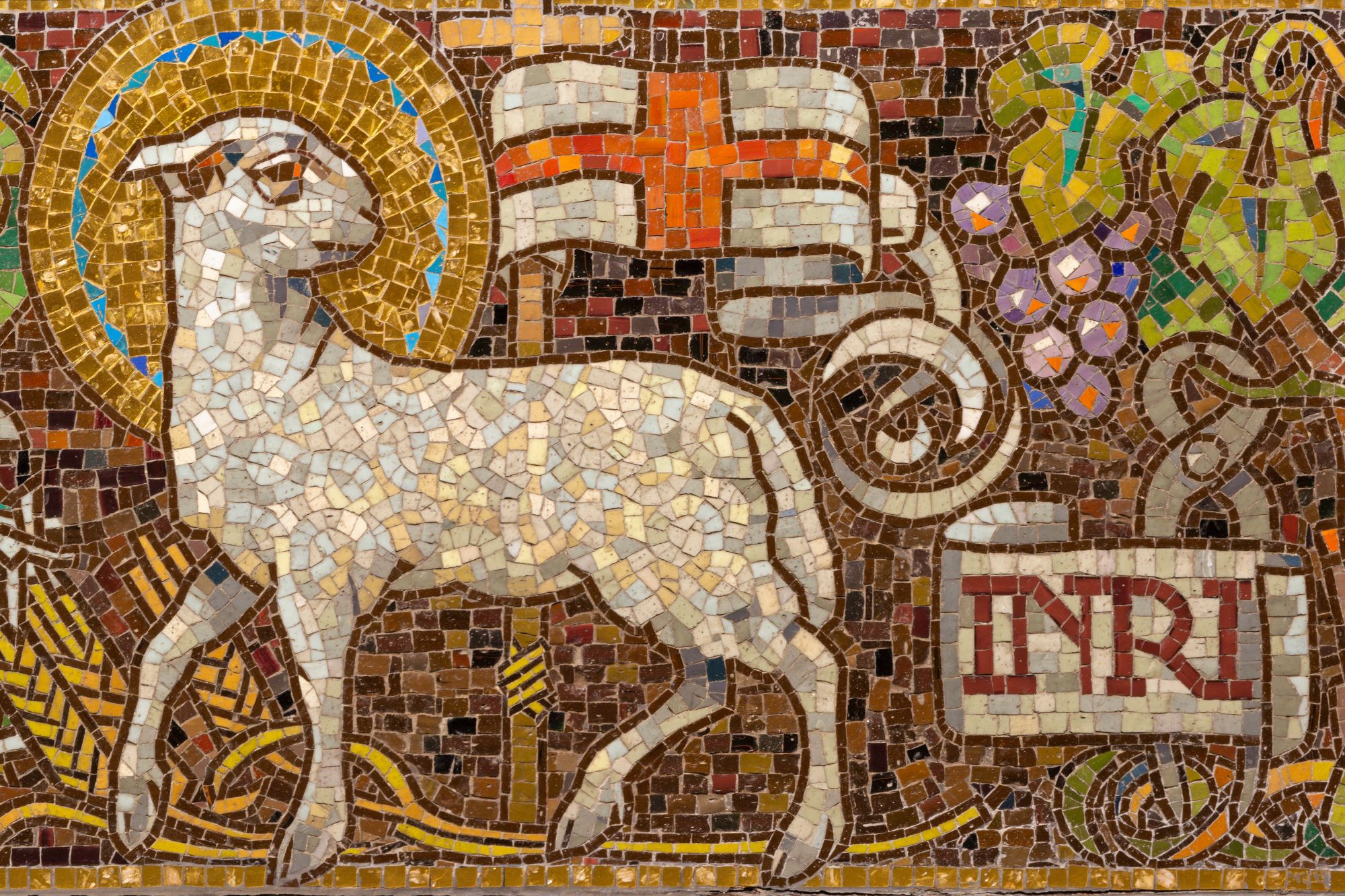
How do we stay holy, stable in faith? We reach out and put our hand on Jesus. Messiah’s sacrifice on the cross is big and pure enough to reconcile every human ever born, but we must reach out and put our hand on the head of the Lamb, acknowledging our sin, humbling our hearts in repentance, and trusting that God’s character is always to have mercy.
How do we stay rooted and grounded in faith? We live a lifestyle of humble repentance. We keep reaching out to Jesus.
Paul has a similar “provided that” condition in Romans 8 that will help us transition to his next statement in Colossians.
In Romans 8:17, Paul tells us we are children of God in Christ, “if children, then heirs, heirs of God and fellow heirs with Christ, provided we suffer with him in order that we may also be glorified with him.” This is one of my “life verses,” a promise to cling to and to guide my walk. It’s also heady. Not only are we counted as children of God but we are co-heirs – what? – co-heirs with King Jesus. But there’s that “provided” clause – we are co-heirs provided that we suffer with Jesus in order that we may also be glorified with him. Whew! That’s a lot. From co-heirs to the fellowship of suffering. Can we take it?
Let’s come back to it.
In verse 24, Paul says one of those statements that makes people think he’s an arrogant jerk. But he’s not. He’s actually being a humble disciple and showing us how to be humble disciples, too.
Verse 24: “Now I rejoice in my sufferings for your sake, and in my flesh I complete what is lacking in Christ’s afflictions for the sake of his body, that is, the church.”
Many generations of Christians have read this verse and thought, “Is Paul saying that he is completing Jesus’ work of atonement? Was there something lacking from Jesus’ sacrificial death, from his suffering?” No. Nothing is lacking from Jesus’ life and death and resurrection. Jesus’ sacrifice is complete because he is both God and man, so he is the most perfect Lamb that ever lived.
OK, Paul, what are you saying, then?
The rabbi-disciple relationship is one of deep mentorship and spiritual formation. Disciples don’t just meet with their rabbi a few days a week or even a few hours a day. Earnest disciples leave all they have and live with the rabbi. They travel with him. They see how he lives – from the time he wakes to the time he goes to bed. Yes, they discuss the Scriptures and they argue through theological and practical questions. But the real learning is in the watching and in the doing: how he treats his wife and children, how he treats the sick, how he engages with all of life’s ups and downs.
This is why Paul says to us elsewhere, Imitate me as I imitate Messiah (1 Cor 11:1). Rabbi Sh’aul tells us to learn from him as he learns from Rabbi Jesus. Paul is imitating Messiah and learning to be a suffering servant.
I ran across a quote that smacked me upside the head a few weeks ago, from Dietrich Bonhoeffer:
“Salvation is free, but discipleship will cost you your life.”
“Salvation is free, but discipleship will cost you your life.” It did cost Bonhoeffer his life, at the end of a Nazi rope. Discipleship cost Paul his life, too. Yet, they certainly heard the Father say the glorious, affirming words we all long to hear: “Well done, my son, good and faithful servant.”
Paul is sitting in prison as he writes the Colossians. He tells us he rejoices in his sufferings. Why? Because Paul the student sees himself approaching the Master. He sees what is lacking in his own discipleship, but he also sees Rabbi Jesus calling him to give more of himself for the body of believers. Just as Jesus died to minister reconciliation to the world, Paul is suffering to minister the gospel to the pagan nations. It’s not that Paul is completing Jesus’ work on the cross. It’s that Jesus is completing Paul’s transformation into the image of Christ (cf. Phil 3:8-11).
So, friends, are we ready to be disciples of Christ? Are we ready to commit or recommit ourselves to learning from Rabbi Jesus?
First, we need to live a lifestyle of repentance. That is how we show our trust in our loving, merciful God. There are various ways to practically do this. Here are three:
- Praying the Jesus Prayer as you catch yourself having an evil thought, the impulse to gossip or lie: “Lord Jesus Christ, Son of God, have mercy on me, a sinner.”
I came to a realization a year or so ago that I will be praying this every day, several times a day, for the rest of my life. But it’s a way throughout the day to reach out and touch Jesus, the Lamb of God who takes away the sin of the world. - Closing your day with Evening Prayer or Compline, which both include confession of sin. Compline has become a very important ritual to close my day. Even if it’s too late and I’m exhausted, I stop before bed to say the confession and to commend my spirit into the hands of God. Confessing my sins helps me release the day and lie down in peace.
- Meeting with one of our priests for the Sacrament of Confession. Fr. Michael will be back soon and has encouraged us to reach out to him. And Fr. Brad is also available to hear confession and offer absolution.
Second, we need to evaluate the places of suffering in our lives and see where we suffer because we are in sin and where our suffering is Christ working us more and more into his image.
I believe every difficult thing in our lives is God asking “Do you trust me? Do you love me? Do you believe that I love you? Obey my commandments.” Obedience sometimes requires suffering.
God does provide every good gift – our cars sitting outside, our homes, our fridges full of food. He does heal today. But sometimes he says, your healing will come in the next life. Can we still love and trust him? If you’re in chronic pain, can you still love your neighbor? When you’re broke and hungry, can you still obey “Thou shalt not steal”? When you get that breathtaking diagnosis, can you still say, “Blessed be the name of the LORD”? Whether you think you can or know you can’t, reach out to Jesus, the Suffering Servant, our Great High Priest who knows our every weakness, who is teaching us to be steadfast and faithful like him.
This call to suffering discipleship is countercultural, it is foolishness to Greeks and a stumbling block to Jews. In a world that is living its best life now on Instagram, enduring suffering for God or others is utter nonsense. The world says, “There’s enough suffering in the world. I’m going to get my good life now while I can.”
And for Jews, the thought of a king that is caught and executed as a traitor by the pagan authorities is a stumbling block. They have plenty of kings who died by the sword of the Gentiles. The Hebrew Scriptures are full of such stories. So why is the story of Jesus any different? It’s just another defeat, they think, another failed wannabe. So they move on.
But Jesus is not any old king. He is the image of the invisible God. He is the Holy One in the Burning Bush, the Majestic One who allows Moses to see his backside on Sinai, he is the Son of Man standing before the Ancient of Days in Daniel 7! He is the First Fruit of the Resurrection!
He is the mighty king who lays down his crown and gets in the muck with the peasants so he can wash us and dress us for the palace.
Sharing in Christ’s suffering is a foretaste of the glory we share with him (1 Pet 4:13, 5:10). We close with a word from Peter: “But rejoice in so far as you share Christ’s sufferings, that you may also rejoice and be glad when his glory is revealed” to all the world.
What glory it will be when we hear the Father say, “Well done, good and faithful daughter, good and faithful son”! Amen.
Comments
2 responses to “Sermon: Put your hand on Jesus”
I really enjoyed and endorsed your study and sharing , but and it’s a big one dear friend ! I never have and never will believe that any man has the power to give you forgiveness. As to confession where in the bible does it say to confess to a man ? This is a part of the Catholic Church with which I so disagree ! Look foreword to hearing from you lovely girl xxx
Valmai, James tells us to confess our sins to each other (James 5:16). We then announce the forgiveness of God promised in the Scriptures. This is true of all of us, not just ordained priests. I mentioned the rite of confession as an option, not a commandment. We have only one mediator, Jesus, and yes, we all can go directly to him and confess. But sometimes it is good to hear aloud from a brother or sister in Christ the reminder that God truly does forgive us.
That’s all I have time for now, but I’d love to talk more about this and hear how you are. PM me on FB and we can try to set up a call. Blessings, friend.